Case studyWoven leather bags · Private label · USA

Whale Tail Weaving: a Nantucket basket, rewoven in Italian leather

A Cape Cod weaver turned a 19th-century basket into a patented leather bag. Italian Artisan found the workshop and the weaver who could make it, then grew it into a three-piece range: bucket, tote and clutch, hand-woven in vegetable-tanned leather outside Milan.

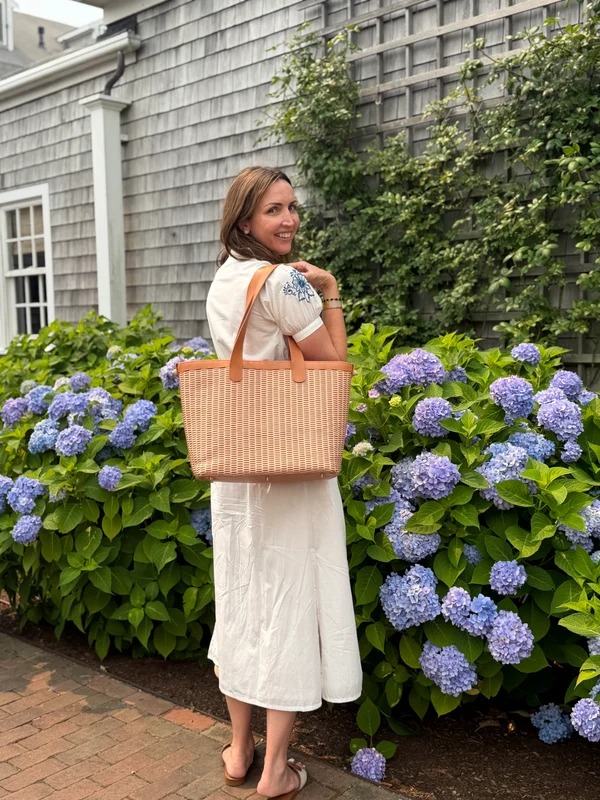
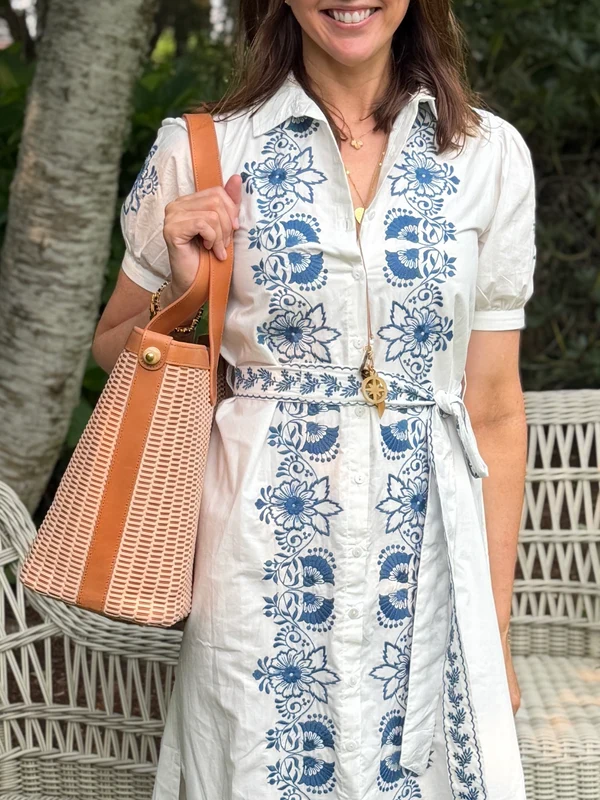
Whale Tail Weaving leather Lightship Basket tote in two-tone woven leather, carried by a model in a white dress
Leather Lightship Basket · Tote
  • 3styles: bucket, tote, clutch
  • 100bags in the latest production run
  • 2leathers, hand-cut into strips and woven
  • 1patented design, made in Italy since 2024
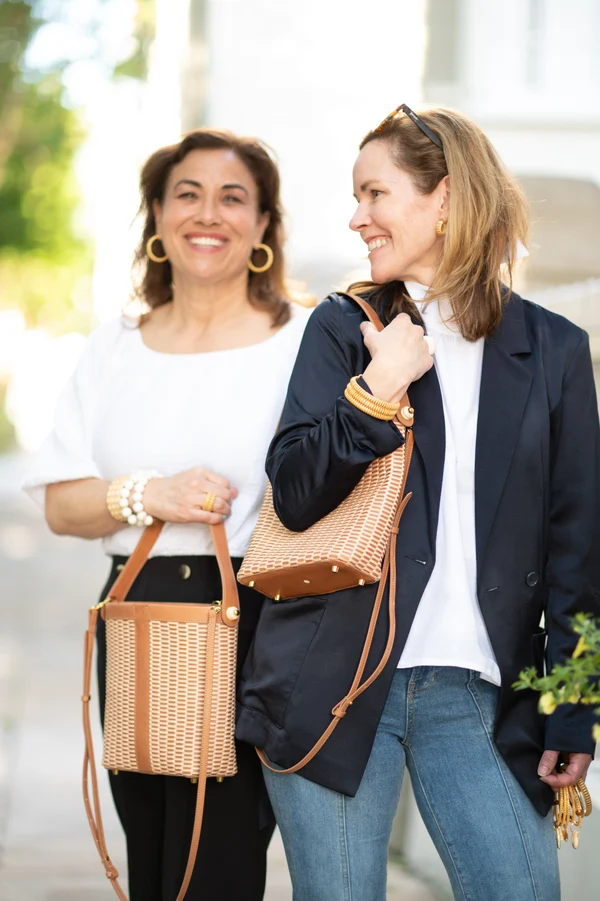
Two women carrying Whale Tail Weaving woven leather bucket bags on a street in Charleston
01The brand

An American craft tradition, carried into leather

Whale Tail Weaving was founded by Bridget Wiatrowski, a Cape Cod native who learned to weave Nantucket lightship baskets from her mother. In the 1800s, sailors on Nantucket's whaling ships and lightships wove these baskets during the long hours at sea. They became family heirlooms. Bridget weaves them today, and the brand's jewellery and accessories carry the same maritime vocabulary: cane weave, cherry wood, hand-carved fossil mammoth ivory in place of the whale ivory of the past.

Her idea was to take the basket off the shelf and onto the shoulder: the lightship weave, reproduced in leather, as a bag. The design is registered with the US Patent and Trademark Office. The Leather Lightship Basket range now has three pieces, a bucket, a tote and a clutch, sold at $950 to $2,750 and stocked from Nantucket to New York, London and Tokyo.

What Bridget needed was someone in Italy who could weave leather the way she weaves cane, and a workshop that could turn the panels into a finished luxury bag. Neither is a standard supplier.

  • Based inNantucket, Massachusetts, USA
  • CategoryWoven leather bags and heritage accessories
  • Made inItaly · workshop outside Milan, weaver in the Marche
02The brief

A weave first, a bag second

Most bag projects start with a pattern. This one starts with a panel: strips of leather, hand-cut and woven in the lightship pattern, that then have to behave like a bag body. Every decision downstream depends on getting that panel right.

  • Weaving is not a leather-goods skillThe strips have to be cut clean, woven tight and kept square. That is a weaver's job, done before the bag maker touches the piece.
  • The leather has to survive the cutVegetable-tanned leather cut into narrow strips shows every flaw on the edge. The tannage, the finish and the back of the hide all matter.
  • A patented design with a signature detailHand-carved fossil mammoth knobs, made in the US and fitted in Italy. The brand's identity travels with the hardware.
  • A summer selling seasonThe brand sells from June to August. A range that lands in September has missed its year, so the material lead times drive the whole calendar.
03The range

One weave, three silhouettes

The bucket came first. The tote and the clutch were developed on the same panel, the same two-tone weave in hazelnut and cream, the same trim leather and the same gold hardware, so the three read as one family.

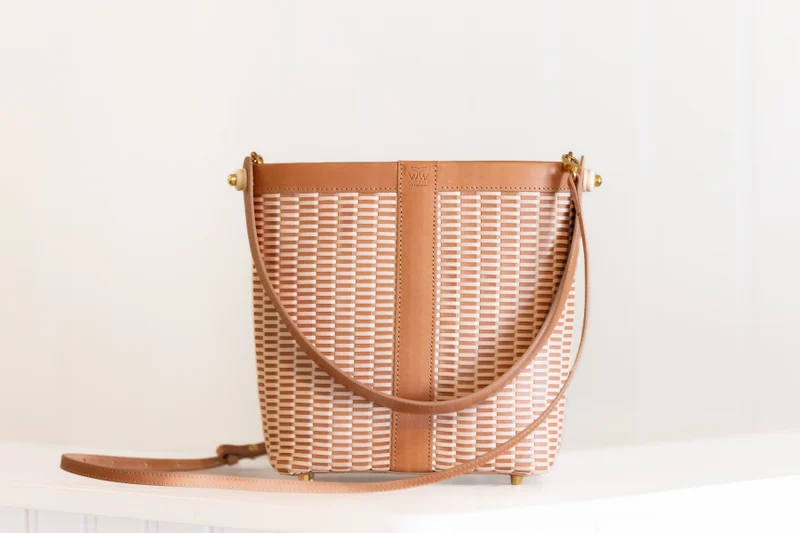
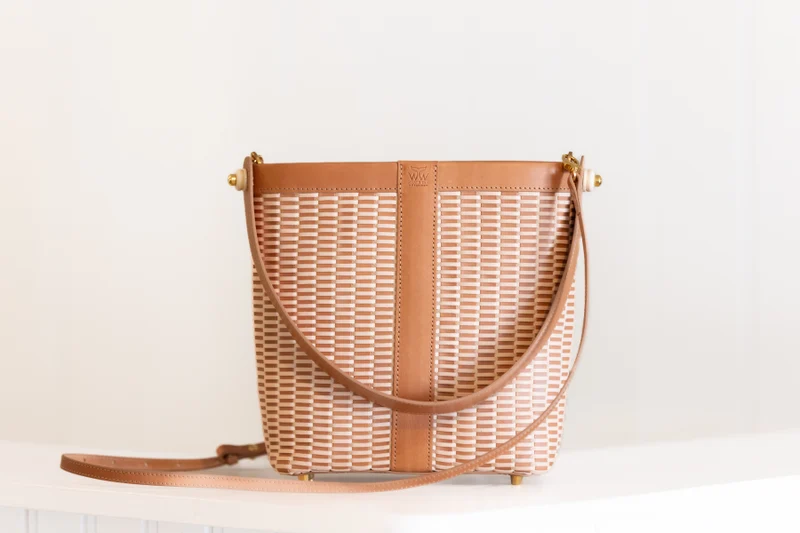
  • Whale Tail Weaving leather Lightship Basket bucket bag in woven hazelnut and cream leather, front view

    Bucket The original

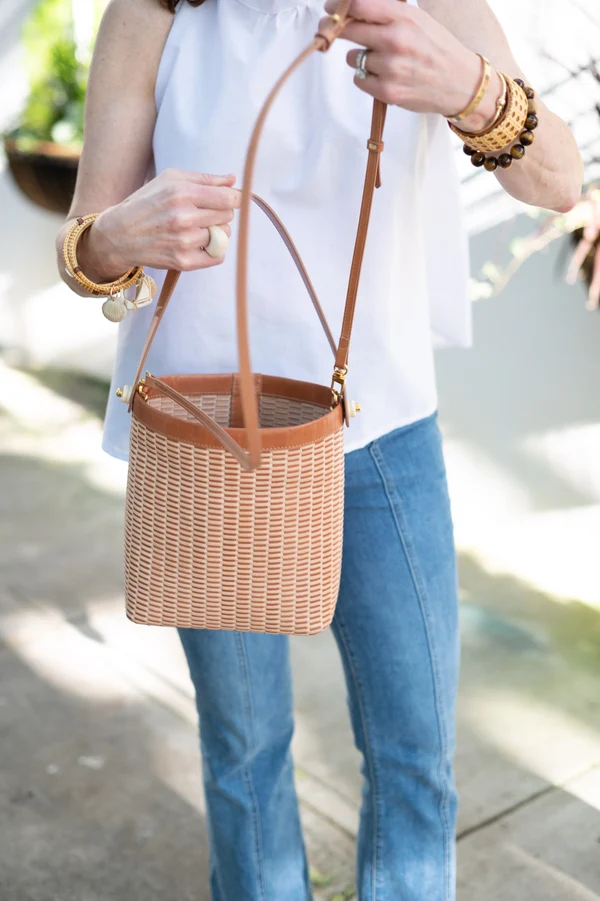
    The bag that started the range: the lightship basket shape, woven in leather, with a long adjustable strap, hand-carved fossil mammoth knobs and a lined interior. Produced with Italian Artisan since 2024.

    • Leather: Italian vegetable-tanned, hand-woven panels
    • Hardware: Italian gold-tone, fossil mammoth knobs
    • Retail: $1,950
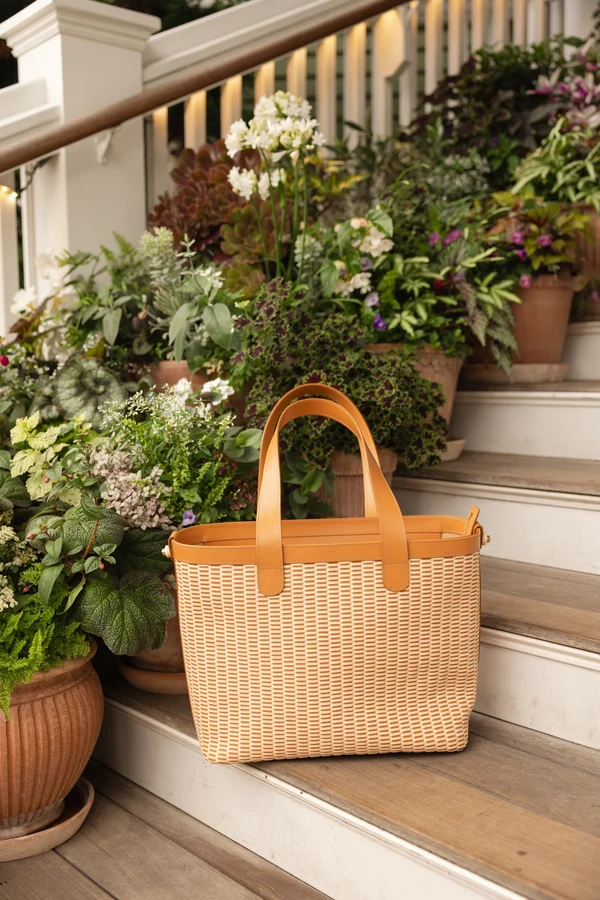
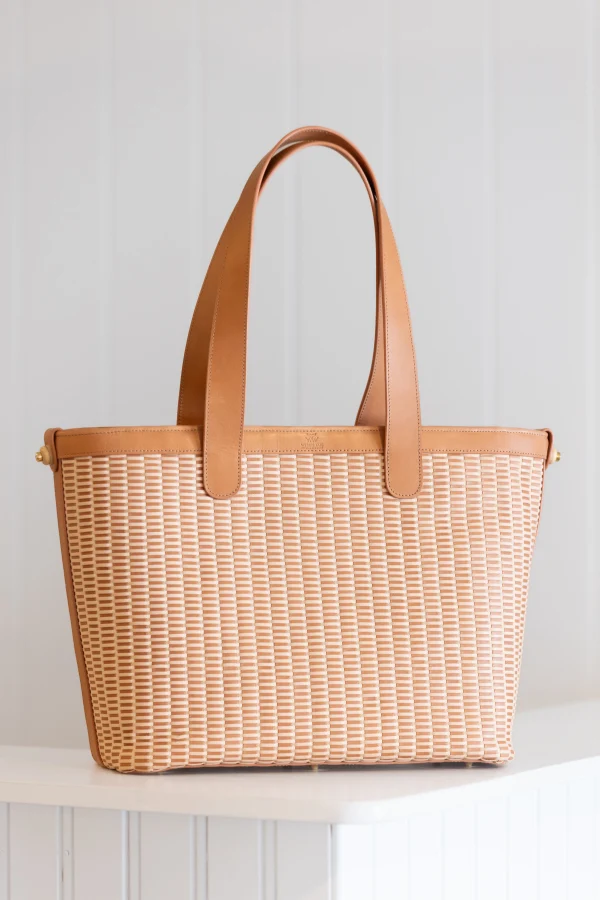
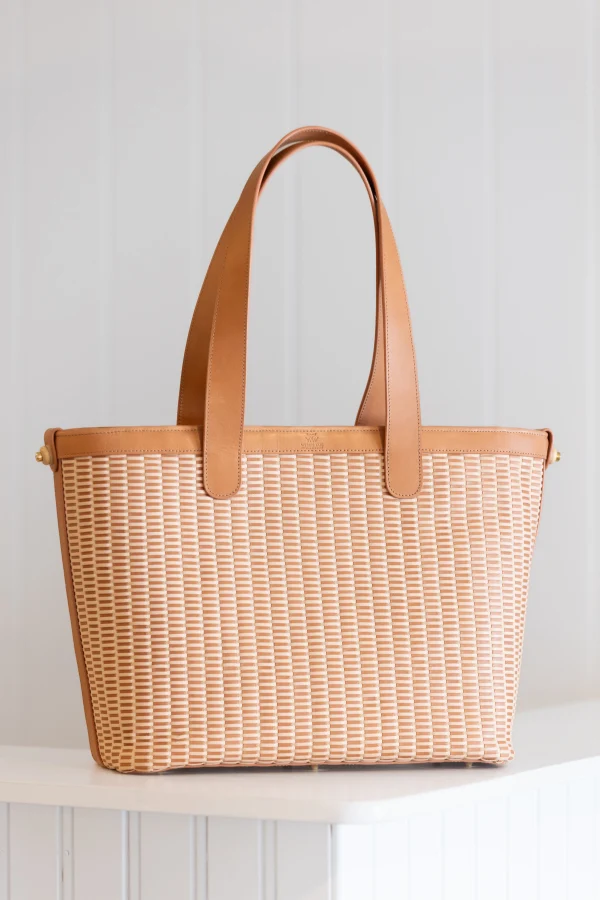
  • Whale Tail Weaving leather Lightship Basket tote with double leather handles, front view on a white shelf

    Tote New for 2026

    A wide, open carry-all on the same weave: 19 inches across, a hidden zipped security pocket and an easy-access pocket inside, trim and handles in matching leather. Developed from a single spec sheet to a finished piece in two rounds of samples.

    • Size: 19 × 12 in, 6 in gusset
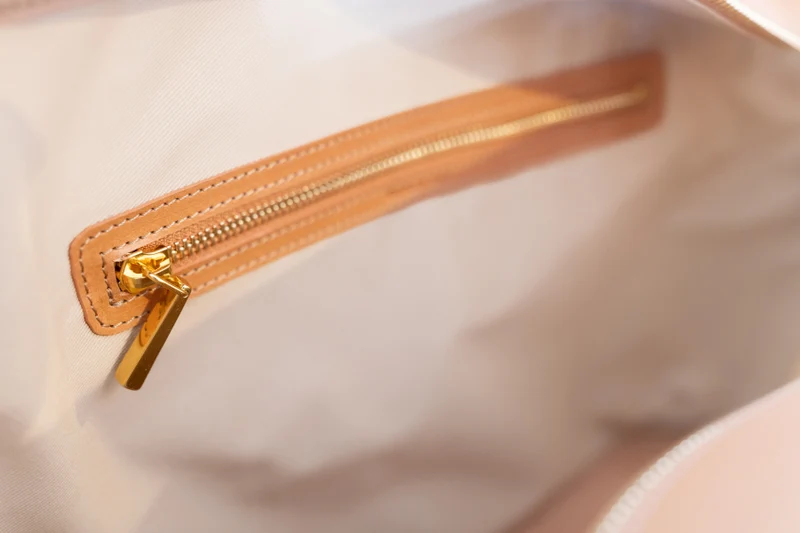
    • Interior: zipped security pocket, open pocket, cotton lining
    • Retail: $2,750
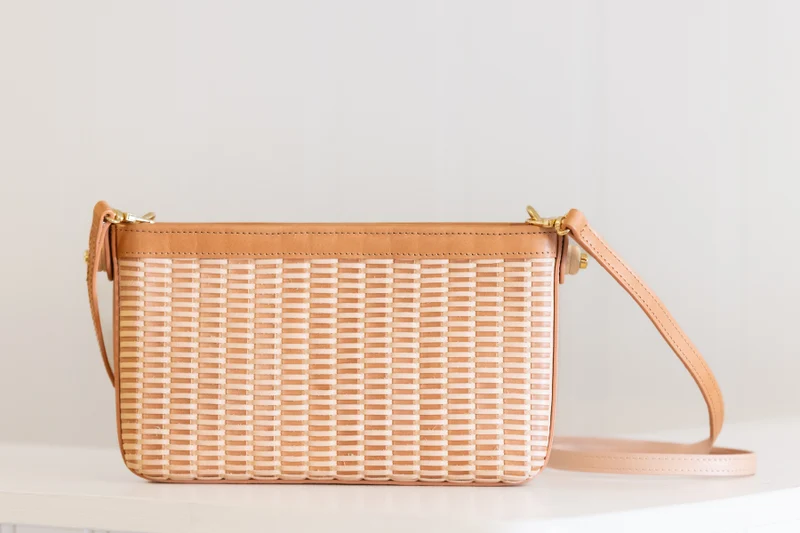
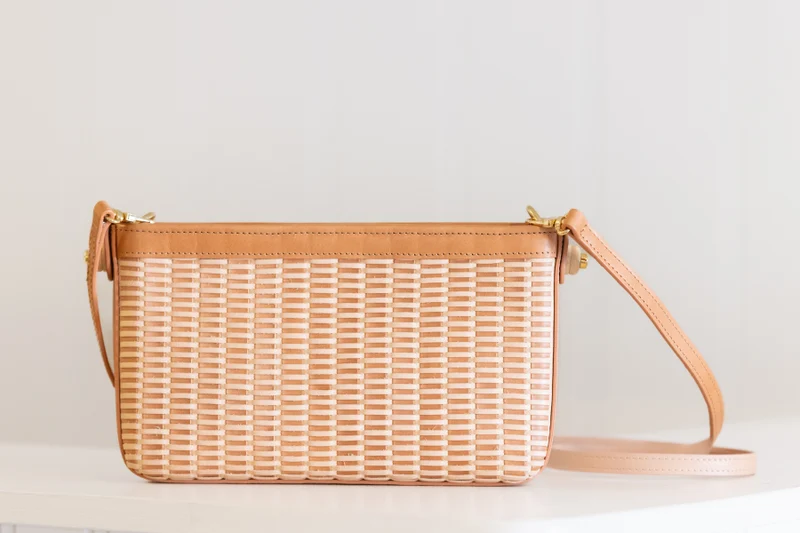
  • Whale Tail Weaving leather Lightship Basket clutch in woven leather with a detachable crossbody strap

    Clutch New for 2026

    The entry point to the range, and the piece retailers asked for most. A slim woven front, a detachable crossbody strap, gold hardware and the fossil mammoth knob. Its shape was redrawn after the first sample, once the founder had the piece in her hands.

    • Size: 10 × 6 in, 1.5 in gusset
    • Carry: hand-held or crossbody
    • Retail: $950
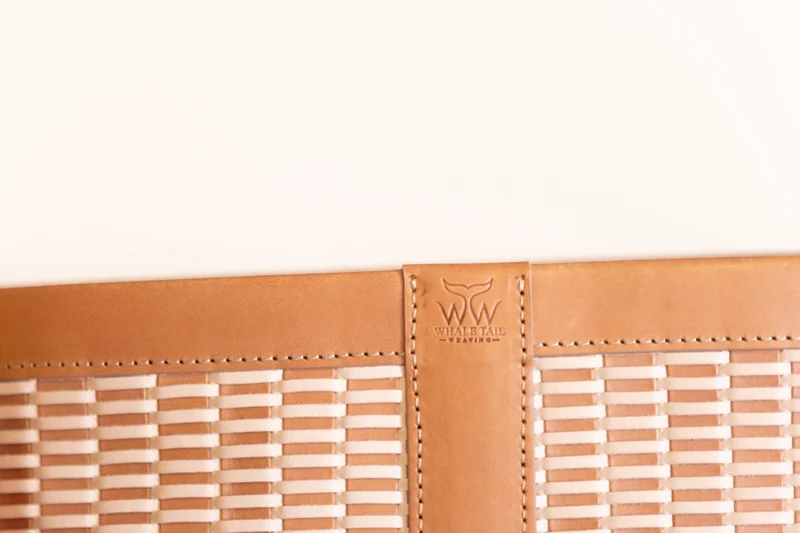
  • Close-up of the Whale Tail Weaving embossed leather tab on the woven bucket bag
    Embossed logo tab on the woven panel
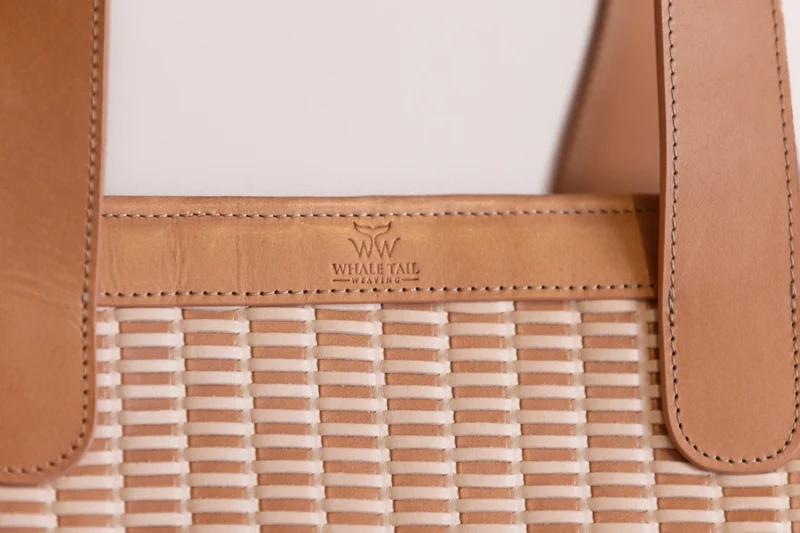
  • Close-up of the tote's leather handle base and embossed logo over the two-tone weave
    Tote: handle base and logo
  • Inside the tote: the hidden zipped security pocket with gold-tone zip
    Tote: hidden zipped pocket
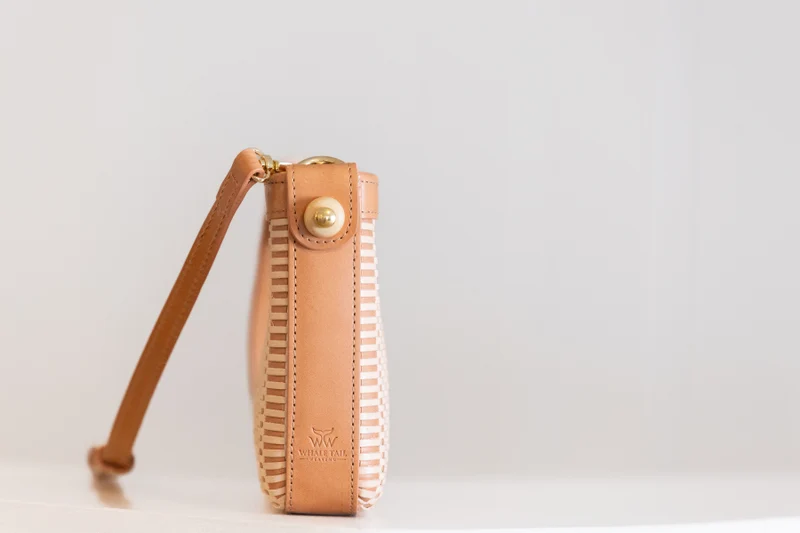
  • Side view of the woven leather clutch showing the gusset and the fossil mammoth knob
    Clutch: gusset and mammoth knob
Develop your bag collection Leather goods from 50 pieces per style · how we manufacture bags
04Behind the scenes

How a woven leather bag actually gets made

Three specialists, in three regions, on one piece: a tannery that prepares the hide for cutting, a weaver who turns strips into panels, and a leather workshop that turns panels into bags. Italian Artisan holds the three together.

01From basket to bag

Finding people who could weave leather

Bridget's first attempts, with basket weavers in the US and with leather artisans who had never woven, did not get to a bag she could sell. The lightship weave needs a hand that knows weaving, and a bag needs a hand that knows leather. The two rarely sit in the same workshop.

Italian Artisan split the job. A specialist weaver in the Marche cuts the leather into strips and weaves the panels; a family-run leather workshop outside Milan cuts the trim, builds the body, fits the lining and hardware and finishes the bag. The bucket bag came out of that pairing in 2024 and has been in production since.
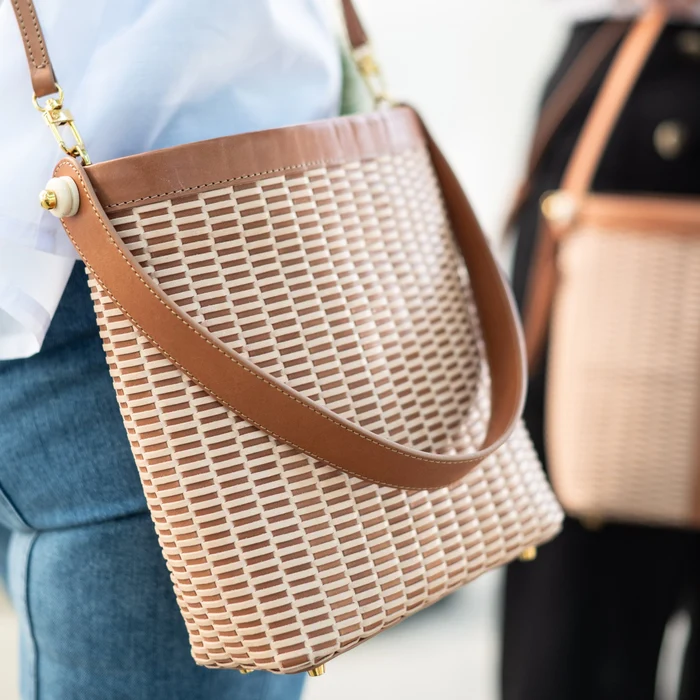
Close-up of the woven leather bucket bag worn crossbody, showing the hand-woven lightship pattern
The lightship weave, in leather
02Extending the range · 2025 to Feb 2026

Two new shapes, two rounds of samples

With the bucket selling, the brand sent a spec for a tote and a clutch on the same weave. The workshop built the first samples by hand-cutting; the founder reviewed them in the US and logged every change in a shared feedback sheet. The tote was close on the first pass. The clutch was right in construction but wrong in shape, and was redrawn.

The second round shipped in February 2026 with three custom embossing cliches for the logo. Sampling was invoiced line by line, and production labour was quoted at the same time so the brand could plan the order before the samples had even landed.

  • Founder's verdict on round one: tote approved with small changes, clutch reshaped.
  • Round two: both styles approved for production.
The finished woven leather tote sample on a white shelf
Tote, approved sample
The finished woven leather clutch sample with crossbody strap
Clutch, reshaped and approved
03Costing · Mar to Apr 2026

Taking cost out without taking quality out

The samples were right. The price was not: at the first quote the range would not have worked at the brand's retail points. The founder asked for the whole chain to be reviewed, step by step.

The workshop mapped it: materials, panel weaving, assembly. The weaving was already with the cheapest of three specialists. The lever was the leather. Italian Artisan and the workshop sourced a second tannery able to produce the same vegetable-tanned article at a lower price per square metre, sampled it, and brought the tote's unit cost down while keeping the clutch unchanged. The order was confirmed in April: 100 bags, weighted towards the clutch because retailers had asked for it.

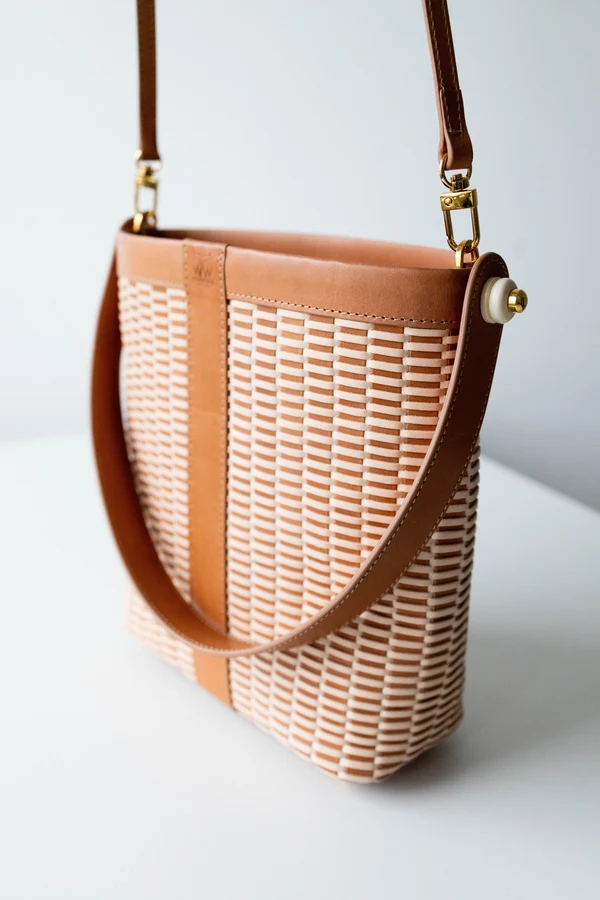
Woven leather bucket bag on a white surface, showing the hazelnut and cream weave
Hazelnut and cream, the two leathers of the weave
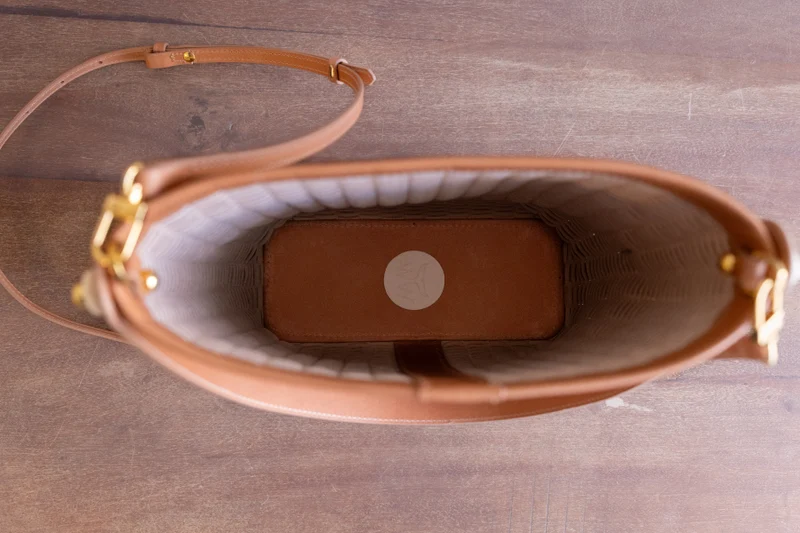
Top-down view inside the woven bucket bag, showing the lined interior and the leather strap
Inside the bucket
04Production · Apr to Jul 2026

Test the panel before you buy the hide

The workshop asked for one precaution before ordering 70 square metres of a new leather: weave a test panel first. It paid for itself. When the new hide was cut into strips, the edges fuzzed. Instead of switching supplier and losing the season, Italian Artisan worked with the tannery on a fix: the back of the hide shaved and an extra wax finish applied. The second test panel came back clean and the leather was ordered.

In June the founder flew in for a day at the workshop, bringing the fossil mammoth knobs with her so they were on the bench when the bags were ready for them. The finished run, 60 clutches and 40 totes, left the workshop in July in four cartons.

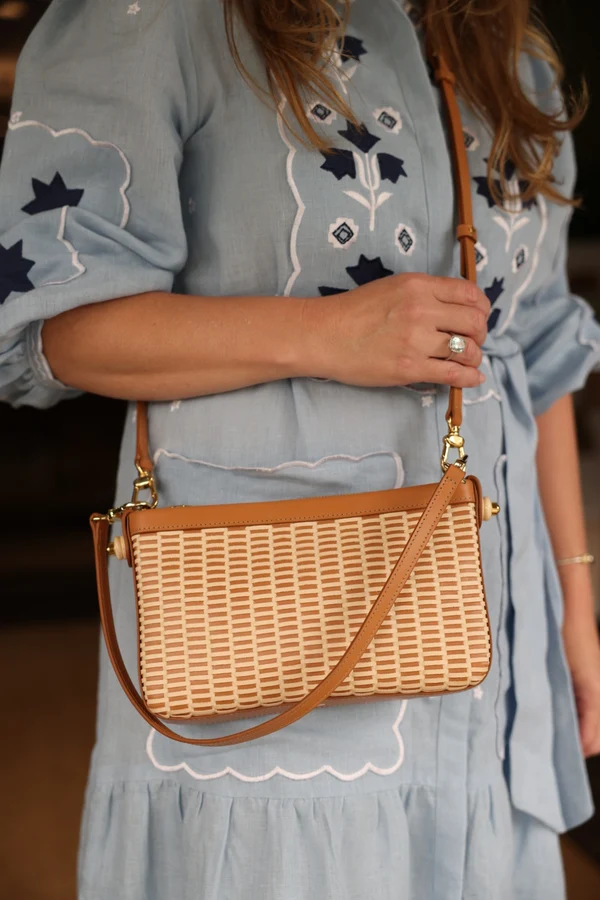
The woven leather clutch worn crossbody over a blue embroidered dress
Clutch, worn crossbody
The woven leather tote on the steps of a porch surrounded by hydrangeas
Tote, Nantucket
05Timeline

From the bucket to the full range

  1. 2024

    The bucket bag

    Weaver and workshop paired for the first time. The patented Leather Lightship Basket goes into production and on sale.

  2. Dec 2025 – Feb 2026

    Tote and clutch sampled

    Two rounds of hand-cut samples, feedback tracked in a shared sheet, clutch reshaped, both styles approved.

  3. Mar – May 2026

    Costing and material tests

    Chain reviewed step by step, second tannery sourced, order for 100 bags confirmed, fuzzing edge fixed with a new finish on the hide.

  4. Jun – Jul 2026

    Founder visit and delivery

    Knobs hand-delivered to the workshop, bags finished and shipped to the US in July for the summer season.

06What made it work

Four things this project teaches about unusual products

  • Split the craft, keep one contact

    A weaver and a bag maker are two trades. The brand never had to manage the hand-off between them, or the tannery behind both. One production manager did.

  • Sample the material, not just the bag

    A test panel costs a few hundred euros. Ordering the wrong leather for 100 bags costs the season. The panel test caught the edge problem before a single hide was bought.

  • Cost transparency is a design tool

    Mapping every step let the brand see where the money went and choose the lever, the leather, without touching the construction or the weave.

  • Protect the idea, then share it

    The design is patented and covered by an NDA with every supplier. That is what let the founder walk into the workshop, hand over her knobs and photograph the process.

07In her words

What the founder said

  • “They understood the importance of protecting our designs. With a robust NDA in place, I have the peace of mind that our ideas and innovations are fully secured.”
    Bridget WiatrowskiFounder, Whale Tail Weaving
  • “Beautiful work! You are a talent.” … “The quality of the work is wonderful.”
    Bridget Wiatrowskion receiving the tote and clutch samples
08Results

A one-bag idea is now a three-piece range

The Leather Lightship Basket is the signature of the brand's leather collection, with the tote and the clutch in stores for the 2026 summer season and the bucket in continuous production.

  • 3styles on one patented weave
  • 100bags in the 2026 run: 60 clutches, 40 totes
  • $950–2,750retail price range of the leather collection
  • 4markets: Nantucket, New York, London, Tokyo
  • A woman in a white top holds the woven leather bucket bag by its strap
  • The woven leather bucket bag hanging by its strap against a white wall
  • A woman carries the woven leather tote past a hydrangea hedge in Nantucket

Have a product nobody seems able to make?

Tell us what it is, how many you need and when you sell. We come back within 1–3 business days with the right specialists, a cost structure and a plan.